Sonam Wangchuk has spent years fasting for causes he believes in. He has done it in sub-zero mountain cold. He has done it in Delhi’s summer heat. On July 18, 2026, police carried him off a protest stage and into a hospital van. He did not go quietly. Neither did his story end there.
Wangchuk, 59, is an engineer and education reformer from Ladakh. Many Indians know him as the inspiration for a character in the 2009 film 3 Idiots. Fewer know the full arc of his activism: a mountain-water innovator who became one of India’s most closely watched protest leaders.
.jpg)
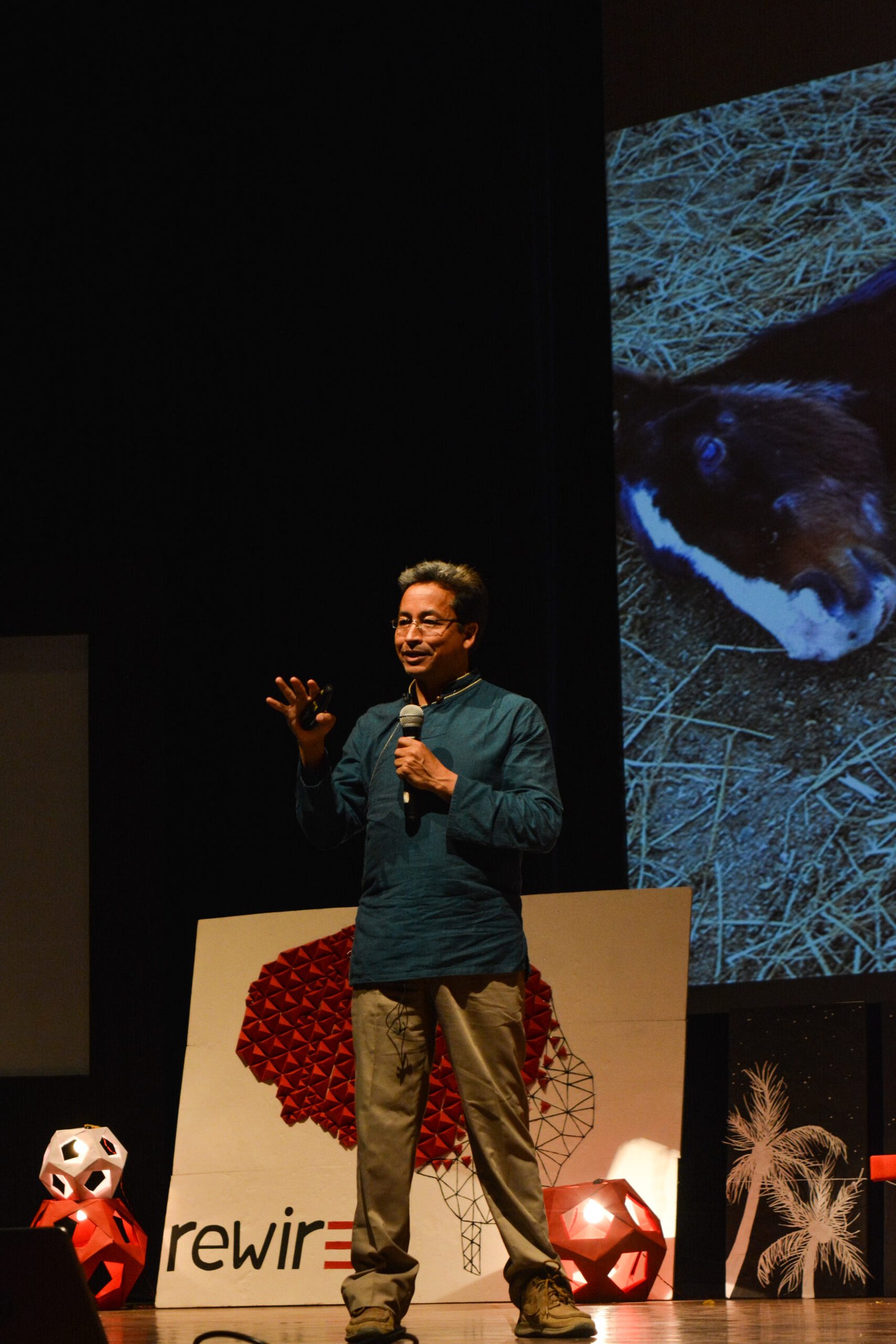
Sonam Wangchuk, photographed in 2017. (Image: Wikimedia Commons)
Who Is Sonam Wangchuk?
Wangchuk trained as a mechanical engineer. In the 1980s, he co-founded SECMOL, a school reforming education in Ladakh. He later built “ice stupas,” cone-shaped structures that store winter meltwater for dry spring months. In 2018, he won the Ramon Magsaysay Award for this work. He also founded the Himalayan Institute of Alternatives in Ladakh, a hands-on university for sustainable living.
For most of his career, Wangchuk was known as an innovator, not a protester. That changed after 2019.
The Ladakh Statehood Movement
In 2019, India’s government revoked Jammu and Kashmir’s special status. It split the region into two federal territories: Jammu and Kashmir, and Ladakh. Neither got its own legislature. Ladakh, in particular, lost the land protections it once had as part of a state.
Local groups grew worried. They feared outside investors could buy up fragile land and mining rights. Two organisations, the Leh Apex Body and the Kargil Democratic Alliance, joined forces. Together with Wangchuk, they began demanding two things. First, statehood for Ladakh. Second, protection under the Constitution’s Sixth Schedule, a set of rules that gives tribal-majority areas more control over their own land and resources.
Years of Fasting
Wangchuk turned to hunger strikes to press these demands. He fasted for five days in early 2023. He announced another ten-day strike months later. In March 2024, he held a 21-day “climate fast” in freezing Leh temperatures. Talks between local leaders and the central government had just collapsed. Wangchuk ended that fast on March 26, taking a glass of juice from a young girl. “This is not the end of the agitation,” he told the crowd.
In late 2024, Wangchuk led a month-long march from Leh toward Delhi, called the “Delhi Chalo Padyatra.” Police detained him and dozens of supporters at the capital’s border. They went on hunger strikes inside the police stations where they were held. Eventually, authorities let them proceed to Rajghat, Mahatma Gandhi’s memorial, on October 2, 2024.
Violence in Leh, and an Ultimatum
By August 2025, the core demands were still unmet. Wangchuk joined another hunger strike, this time in Kargil. He warned that patience among Ladakh’s youth was running out.
That warning proved accurate in a tragic way. In September 2025, after 14 days of fasting, protests in Leh turned violent. Crowds moved away from the strike site. They clashed with police and torched vehicles and buildings. Police opened fire, saying they acted in self-defence. Four people died. Roughly ninety were injured.
Wangchuk called off his fast once the violence began. India’s home ministry blamed him anyway, accusing him of inciting the crowd through “provocative statements.” Police arrested him on September 26, 2025, and detained him under the National Security Act. He was moved to a jail in Jodhpur, Rajasthan. His wife, Gitanjali J Angmo, challenged the detention in the Supreme Court. The case tested how far a government can go in silencing a protest leader it blames for unrest — a question that remains open to debate.
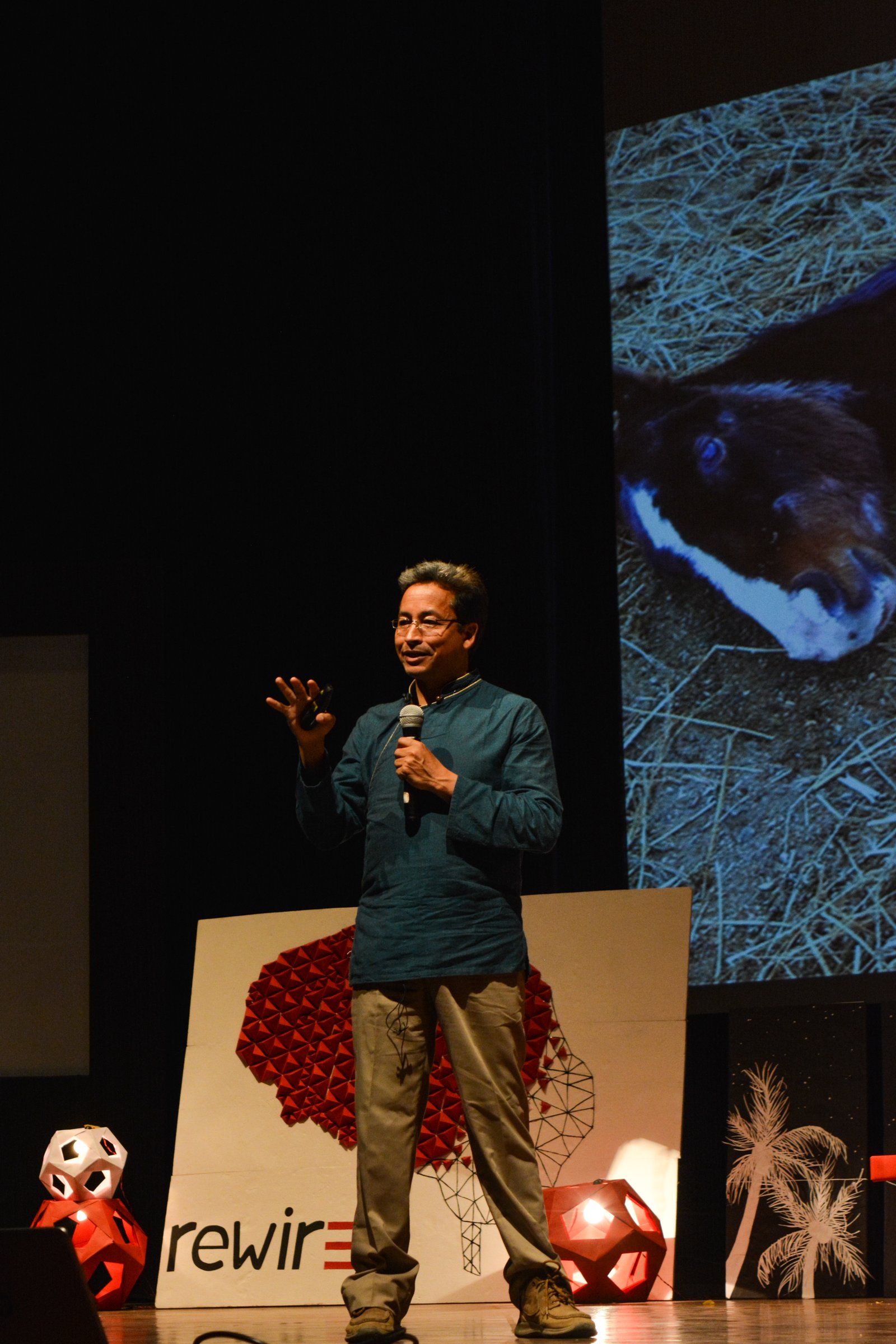
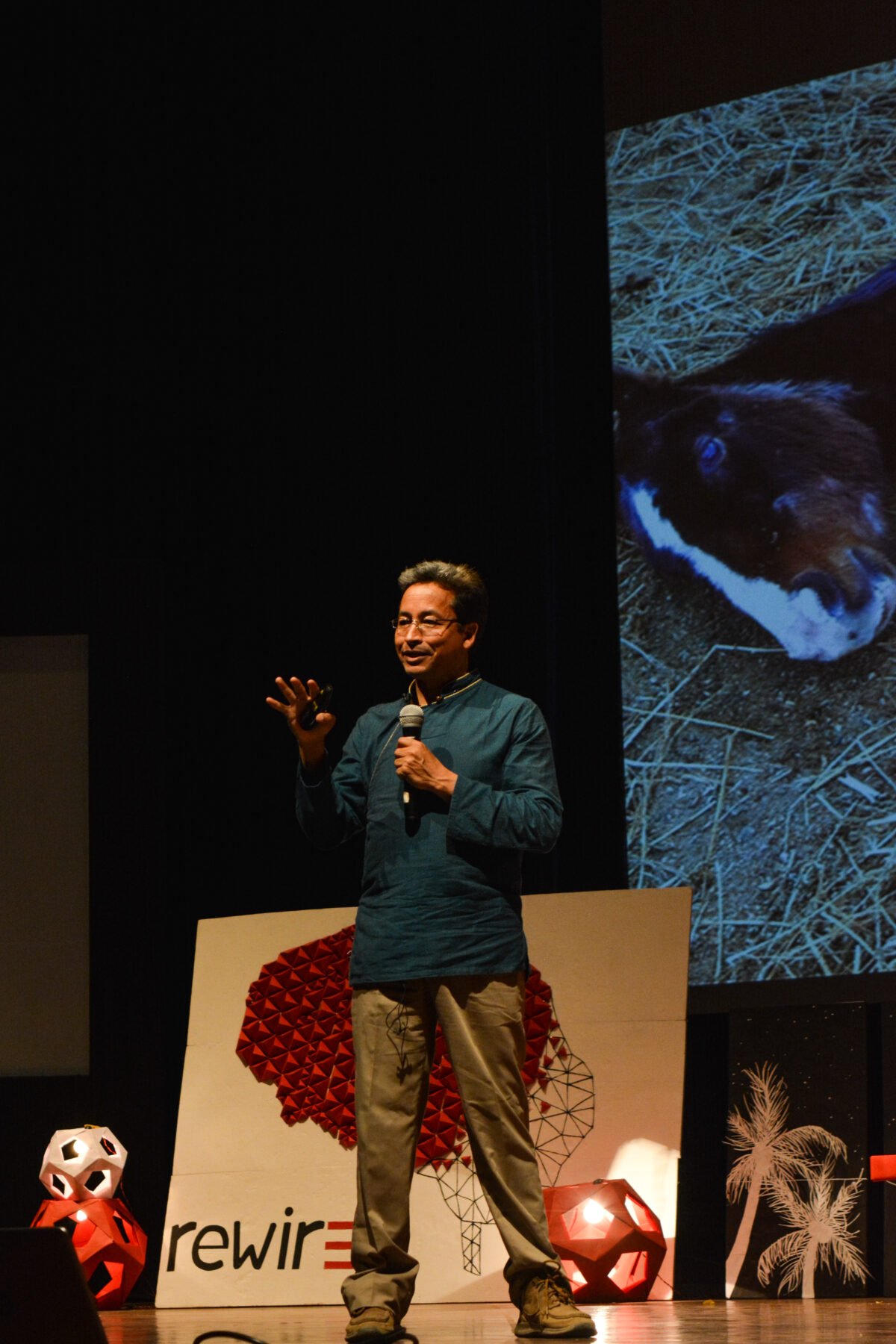
Sonam Wangchuk addressing supporters. (Image: Wikimedia Commons)
A New Fast, a New Cause
By mid-2026, Wangchuk had shifted his focus. In May, a satirical youth movement called the Cockroach Janta Party formed. Its name mocked a remark by India’s Chief Justice, who had compared unemployed young people to “cockroaches.” The group’s founder, Abhijeet Dipke, began a sit-in at Delhi’s Jantar Mantar. Their demand: the resignation of Education Minister Dharmendra Pradhan, after a leaked medical entrance exam paper affected millions of students.
Wangchuk joined the fast on June 28, 2026, in solidarity. The agenda grew broader over time. Protesters wanted the minister’s resignation. They wanted reform of India’s exam system. They wanted compensation for families of students who had died by suicide after the leaks or resulting exam failures.
Health Crisis and Forced Hospitalisation
The fast stretched past two weeks, then three. Wangchuk survived on salt water alone. He lost roughly ten kilograms. Opposition leaders publicly urged him to stop. Doctors warned his condition was worsening by the day.
On July 16, 2026, the Delhi High Court ordered that “whatever medical intervention is needed to save Sonam Wangchuk’s life should be done.” Two days later, police removed him from the protest site and took him to Safdarjung Hospital. The Cockroach Janta Party called it a “forceful abduction.” Delhi Police said it was a court-ordered medical necessity. His wife stayed by his side. She insisted no treatment be given without the family’s consent, and said Wangchuk intended to continue his strike from the hospital.
What Happens Next
As of this week, Wangchuk remains hospitalised, and the standoff over his health and his cause is unresolved. His movements have repeatedly followed a similar shape: a fast, a government response, and a fight over where protest ends and public order begins. That pattern held true for Ladakh’s statehood campaign. It appears to be repeating now, over India’s exam system.
Supporters see a consistent moral thread, from mountain water conservation to constitutional protections to exam-system accountability. Critics, including government officials, argue his tactics have at times tipped into unrest that put lives at risk. Both views have found an audience in India’s ongoing debate over Wangchuk’s methods and his goals.
For more coverage of protest movements and public affairs in India, visit BhagatSingh. For general background on the institutions involved, see Wikipedia.
Sources
- Al Jazeera — Indian police forcibly hospitalise activist after 20-day hunger strike
- CBS News — Appeals for prominent Indian activist to end hunger strike
- Al Jazeera — Indian police arrest Ladakh activist after deadly protests
- BBC — The Indian activist who went on a hunger strike to save his cold desert home
- The Tribune — Sonam Wangchuk detained again after release