Some ministers pass through office and leave little trace. A few change the shape of a country. India, since independence, has had hundreds of cabinet ministers. Only a handful are still remembered decades later, for a decision, a reform, or sometimes a controversy that outlived their term.
This list looks at ten of them. It is not an official ranking, and “popular” means different things to different people depending on politics. Instead, this is a selection based on the scale of what each minister actually did in office, drawn from the historical record. Where a minister also faced a well-documented legal case or controversy, it is noted here too, with attribution, because it is part of the public record. None of it should be read as a finding of guilt; several of these cases ended in bail, discharge, or are still working through the courts.
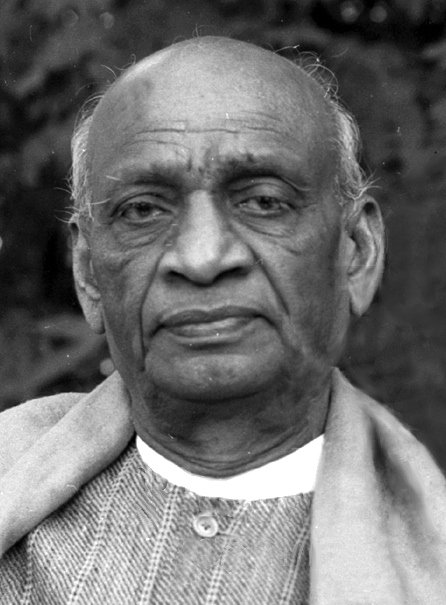

Sardar Vallabhbhai Patel and Manmohan Singh, two of the ministers on this list. Click either image to view or download the full size version. (Images: Wikimedia Commons)
Sardar Vallabhbhai Patel: Stitching a Nation Together
Patel served as India’s first Deputy Prime Minister and Home Minister. His defining achievement came in 1947 and 1948: persuading, and where necessary pressuring, more than 560 princely states to join the newly independent Union of India. Without that effort, the map of India would look very different today. Patel is remembered as the “Iron Man of India,” and a 182-metre statue in Gujarat, the Statue of Unity, now stands in his honour. No major personal legal dispute is associated with his record.
Jawaharlal Nehru: Building the Institutions
As independent India’s first Prime Minister, Nehru also held the External Affairs portfolio for most of his tenure. He championed the Five-Year Plans, industrial public-sector growth, and India’s Non-Aligned Movement stance during the Cold War. His decisions on Kashmir and the 1962 war with China remain debated by historians to this day.
Indira Gandhi: Bold Moves, Bigger Controversies
Indira Gandhi nationalised 14 major banks in 1969, a decision that reshaped access to credit across the country. She also led India through the 1971 war that culminated in the creation of Bangladesh. Her most controversial period came in 1975, when the Allahabad High Court found her guilty of electoral malpractice in a case filed by opponent Raj Narain. Rather than resign, she declared a national Emergency, suspending civil liberties for 21 months, a period historians still treat as the most contested chapter of her career.
Manmohan Singh: The Reformer
Before he became Prime Minister, Manmohan Singh served as Finance Minister under P.V. Narasimha Rao. In 1991, facing a balance-of-payments crisis, he dismantled decades of licence-permit restrictions and opened India’s economy to global trade and investment. Economists widely credit that single budget with setting off three decades of growth. No major personal legal case is attached to his record.
P. Chidambaram: The “Dream Budget” and a Court Battle
Chidambaram served multiple terms as Finance Minister and also led the Home Ministry. His 1997 budget, nicknamed the “dream budget,” cut tax rates and widened the tax base. Years later, in August 2019, the CBI arrested him in the INX Media case, alleging irregularities in a foreign investment approval granted during his tenure. The Enforcement Directorate followed with a separate money-laundering case. The Supreme Court granted him bail in the CBI case that October, ruling that the prosecution had not shown he was a flight risk. The underlying trial has continued since, and no verdict of guilt has been delivered.
Arun Jaitley: The Architect of GST
As Finance Minister from 2014 to 2019, Jaitley steered the Goods and Services Tax through Parliament in 2017, replacing a patchwork of state and central levies with a single national tax structure. Supporters call it India’s biggest indirect-tax reform since independence; critics point to the complexity of its early rollout and its short-term disruption to small businesses. Jaitley passed away in 2019, and no major personal legal dispute marked his record.
Sushma Swaraj: Ministry by Twitter
As External Affairs Minister from 2014 to 2019, Swaraj became known for personally responding to Indians in distress abroad, often coordinating rescues and visa fixes through social media. Her approach was widely praised across party lines as a shift toward a more citizen-facing foreign ministry. She died in 2019, with no significant personal legal dispute attached to her tenure.
Amit Shah: Article 370 and a Cleared Case
As Home Minister since 2019, Shah oversaw the government’s decision to revoke Jammu and Kashmir’s special constitutional status under Article 370, splitting the state into two union territories. Supporters call it the fulfilment of a decades-old political promise; critics, including many in the Kashmir Valley, call it a unilateral move that stripped the region of autonomy. Separately, Shah had earlier been named in the 2005 Sohrabuddin Sheikh case, involving an alleged staged police encounter in Gujarat. A special CBI court discharged him in December 2014, citing insufficient evidence to proceed to trial.
Rajnath Singh: From Home to Defence
Rajnath Singh served as Home Minister from 2014 to 2019 before moving to the Defence Ministry. In that role, he has overseen India’s defence modernisation push, including the “Atmanirbhar Bharat” self-reliance initiative aimed at reducing dependence on imported military hardware. No major personal legal dispute is associated with his record.
Nitin Gadkari: The Highway Builder
As Union Minister for Road Transport and Highways since 2014, Gadkari has overseen one of the fastest expansions of national highway construction in India’s history, along with early moves to promote electric and alternative-fuel vehicles. He is regularly rated among India’s most popular ministers in independent public surveys, credited with visible, on-the-ground infrastructure delivery.
A Note on Property and Public Disclosure
Every candidate for elected office in India, including sitting ministers, must file a sworn affidavit disclosing personal assets, liabilities, and any pending criminal cases before each election. These filings, submitted to the Election Commission of India, are public documents, searchable through election-transparency platforms. They are the primary legitimate source for questions about a minister’s property or pending cases, rather than informal claims, and figures can change significantly between election cycles.
For more profiles and political history from India, visit BhagatSingh. For detailed biographical records on each figure above, see Wikipedia.