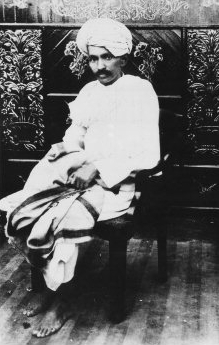
The Champaran Satyagraha (1917) was Mahatma Gandhi’s first major political movement in India, marking the beginning of his leadership in the Indian freedom struggle. It was a nonviolent protest against the exploitation of farmers in the Champaran district of Bihar by British indigo planters.
Background
- British planters in Champaran forced local farmers to grow indigo under the Tinkathia system, which required them to cultivate indigo on 15% of their land.
- Farmers were paid meager compensation, while the demand for indigo declined due to synthetic dyes, leaving them in debt and poverty.
- Those who resisted were subjected to harsh treatment, high taxes, and even physical violence.
Gandhi’s Intervention
- In April 1917, local leaders like Raj Kumar Shukla invited Gandhi to Champaran.
- Gandhi visited villages, recorded testimonies of oppressed farmers, and mobilized volunteers, including Rajendra Prasad, J.B. Kripalani, and Mahadev Desai.
- The British authorities ordered Gandhi to leave, but he refused and faced trial, emphasizing his right to serve the people.
- Due to massive public support, the British had to withdraw the case against Gandhi.
Outcome & Significance
- The British government appointed a committee to investigate, with Gandhi as a member.
- The system of forced indigo cultivation was abolished, and farmers were given relief and compensation.
- This was Gandhi’s first successful Satyagraha in India and laid the foundation for future movements like Kheda, Non-Cooperation, and Civil Disobedience.
- It demonstrated the power of nonviolent resistance and Gandhi’s leadership in India’s independence movement.
Champaran was a turning point in Indian history, proving that peaceful protest and mass mobilization could challenge British rule effectively.